Author Archive

Call for Papers: Emerging Methods for Digital Media Research

Another brief announcement: along with our CCI colleague Larissa Hjorth, Axel and I are looking forward to editing a special issue of the Journal of Broadcasting & Electronic Media (JOBEM) on the theme “Emerging Methods for Digital Media Research”, due for publication in March 2013. If you work in a related area, please consider submitting an abstract by the March deadline. Details follow below.
Read the rest of this entry →

30

01 2012

CCI Winter School – Apply Now

In my new role as Deputy Director of the ARC Centre of Excellence for Creative Industries & Innovation (CCI for short), I’m excited to be leading the team that’s organising our most ambitious PhD and Early Career Researcher activity to date – the CCI Winter School, to be held in balmy Brisbane in late June this year. It’s a selective but free event (you or your institution only need to cover your travel), involving a fairly small group of promising PhD students and early career researchers from around the world. If you’re in the northern hemisphere and looking for a 2012 summer research school, why not consider being adventurous and coming down under instead? Axel and I will both be on hand as mentors, along with a bunch of other fabulous people.

Applications close on 31 January – don’t miss out!
Read the rest of this entry →

13

01 2012

New ARC Linkage project: Social media in times of crisis

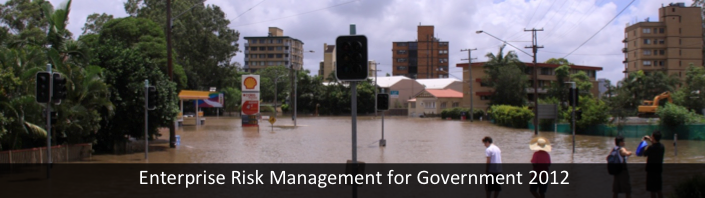
This morning the Australian Research Council announced the latest round of major grant funding, and I’m pleased to be able to report some very good news. Along with our CCI colleagues Kate Crawford and Terry Flew, Axel and I were awarded funding for a Linkage Project on the uses of social media for crisis communication, which we’ll conduct in partnership with the Queensland Department of Community Safety, Brisbane-based public policy think tank Eidos Institute, and our colleagues at Sociomantic Labs:

Social Media in Times of Crisis: Learning from Recent Natural Disasters to Improve Future Strategies

Recent Australian and international natural disasters have demonstrated the changing shape of public communication in times of crisis. Mass media and face-to-face communication are now complemented by a variety of channels from SMS to social media platforms like Twitter and Facebook.

This project combines large-scale quantitative and close qualitative analysis to investigate the public use of social media during disasters, working with key emergency management organisations to improve their communication strategies. It will highlight successful approaches as well as potential pitfalls; the strategies which the project will develop and test will help to make emergency responses in natural disasters faster and more effective.

The project builds on and substantially extends the various bits of work we’ve already been doing in this area, and which we’ve reported on in this blog and elsewhere over the last several months (and here I should especially acknowledge the contribution of Frances Shaw at UNSW). Really looking forward to getting going on this one in the new year – stay tuned for updates!

01

11 2011

Transforming Audiences Keynote

[crossposted at my own blog creativity/machine.]

On the 1st and 2nd of September I was in London at the third Transforming Audiences conference, hosted by CAMRI at the University of Westminster. I was one of four keynote presenters – alongside Nancy Baym, Patricia Lange, and Adriana de Souza e Silva. I had a great time, and I’m very grateful to David Gauntlett and the other conference organisers for inviting me. The keynotes were all video-recorded, and I’ll post the video of mine here once it becomes available. In the meantime, here are my abstract and a copy of the slides (mostly pictures, as is my practice when giving these kinds of talks).

From ‘Broadcast Yourself’ to ‘Follow Your Interests’: Social media five years on

When YouTube started to become popular in 2006, it had little functionality beyond the uploading and sharing of videos, and the invocation to ‘broadcast yourself’. Around the same time, Twitter first invited users to share everyday updates with friends and colleagues in response to the simple question ‘What are you doing?’. In 2011, YouTube is a central player in the contemporary media ecology, extending well beyond amateur videosharing; and Twitter plays an increasingly central role in the origination and dissemination of real-time news, largely as a result of social, cultural and technological innovations originally introduced by the user community. At the same time, the ongoing commercial evolution of these and other ‘social media’ platforms has gradually repositioned us – as ‘users’ – in new ways. In this presentation I trace some common trajectories across several social media platforms, and discuss their consequences for the future of participatory culture.

13

09 2011

Image sharing in the #qldfloods

In a previous post, I explained how to extract links to known image-hosting services from an archive of tweets, and promised to follow up with a substantial post on image-sharing in the Queensland Floods – this is that post. It’s pretty long, but it does have pictures. Here are the main points:

  1. During the Queensland Floods, we shared and retweeted a lot of images: more than one in every 5 shared links was to an image hosted on one of several image-sharing services.
  2. We overwhelmingly depended on Twitpic and other Twitter-centric image-sharing services to upload and distribute the photographs we took on our smartphones and digital cameras.
  3. The patterns of image-sharing over time seem to match the overall patterns in Twitter activity on the same hashtag, with sharp peaks in both uploading and retweeting early on, followed by a significant drop-off.
  4. Going beyond Twitter, a side excursion to the ‘other’ image-sharing site, Flickr, raises some questions about the role of such services in public memory – for one thing, we might like to rethink our reliance on the mobile snap-and-upload mode of image sharing.

Read the rest of this entry →

06

03 2011

Extracting images from Twapperkeeper archives

This is just a quick post to share another new script – this one takes a list of tweets with pre-resolved URLs, and filters the list for known image-hosting services. I whipped this up as part of our ongoing efforts to go deeper into the dynamics of communication at various phases of the Queensland Floods disaster – prompted in part by the observations I made on the link data, which showed a very high prevalence of user-uploaded images being posted and retweeted. Besides that, our project aims to investigate not only text-based public communication, but also the role of image- and video-sharing (as well as the communities that have emerged around these practices, particularly on the Flickr and YouTube platforms). I’m partway through drafting a substantial post taking a closer look at the role of image sharing (and communication around images) in both Twitter and Flickr during the floods, but for now here is the script and the instructions.

Please note that this script won’t work unless the urlextract.awk and urlresolve.awk scripts have been run on the archive first.


# extractimages.awk - extract tweets containing links to images
#
# this script takes a preprocessed CSV of tweets based on the Twapperkeeper format, looks at the longurl field, and removes any lines that do not contain a link to a known image hosting service
# the urlextract.awk and urlresolve.awk scripts should be run prior to running this script
# expected data format:
# longurl,url,text,[other columns]
#
# Released under Creative Commons (BY, NC, SA) by Jean Burgess - je.burgess@qut.edu.au and Axel Bruns - a.bruns@qut.edu.au
#Project website http://mappingonlinepublics.net

BEGIN {
	getline
	print $0
}

#add more services below as you find them
$1 ~ /(twitpic\.com|flickr\.com|yfrog\.com|plixi\.com|instagr\.am|photobucket\.com|occip\.it|picasaweb\.google|sphotos\.ak\.fbcdn\.net|facebook\.com\/photo|imgur\.com)/ {

print $0 

}

18

02 2011

Discovery Early Career Researcher Awards: Call for Expressions of Interest (Updated)

On behalf of our colleagues in media, communication, cultural and journalism studies at QUT, I’m passing on an announcement about a new Australian fellowship scheme aimed at Early Career Researchers (0-5 years from PhD).

On a personal note, given the focus of our own work and the significant growth in activity around internet, digital media and games studies at QUT in recent years, Axel and I would be particularly keen to see a large number of high quality applications from people working in these areas; and especially those with a demonstrated interest in methodological innovation. Feel free to contact either of us directly for an informal chat or to ask questions about the research and work environment here; however more formal expressions of interest should go to the email addresses listed below. And one other thing to note: the official ARC rules for the scheme haven’t yet been released, but as far as we know so far, it is possible that these fellowships will be open to both Australian and international researchers.

Update: the rules have now been released and are available here – see the bottom of the post for further details on the application process.

In 2011, the Australian Research Council is introducing a new funding scheme for early career researchers, the Discovery Early Career Researcher Award (DECRA), for funding commencing in 2012. We hereby call for expressions of interest from eligible researchers wishing to conduct their DECRA research at QUT in the communication, media, cultural studies and journalism disciplines.

We are the leading media research institution in Australia, having been awarded a ranking of 5 out of 5 (well above world standard) in the Language, Communication and Culture code overall, including a ranking of 5 in the sub-field Communications and Media Studies (one of only two), and a 4 (above world standard) in the Cultural Studies field, in the recent ERA assessment conducted by the Australian Government.

QUT is the headquarters of the ARC Centre of Excellence for Creative Industries and Innovation (CCI), the only nationally-funded centre in the media and communication field, with strong ties to law, economics, business, and education, thus allowing for multiple cross-disciplinary options for research. Successful DECRA applicants will benefit from the vibrant scholarly environment at QUT, and work closely with world leaders in media, communication, cultural and journalism studies.

Further information on how to apply:

The ARC DECRA Funding Rules for awards commencing in 2012 state that non-Australians are eligible, but would be required to be legally resident in Australia from 2012 until the end of the award period.

If you would like to be considered for submission to the DECRA scheme by the Creative Industries Faculty at Queensland University of Technology please send a full CV and project outline to Professor Brian McNair at b.mcnair@qut.edu.au by Friday March 11.

Your CV should include:

A list of recent significant publications (2006 onwards), split into the four categories of:
o Scholarly books
o Scholarly book chapters
o Refereed journal articles
o Refereed conference papers

Number publications continuously and asterisk the publications relevant to this proposal.

Your Project Description – attach the following information in up to 10 pages:

• Project Title
• Summary (100 words)
• Aims and Background
• Significance and Innovation
• Approach and Methodology
• Benefit
• Communication of Results
• References

18

02 2011

Media use in the #qldfloods

As I’m sure you’re aware, last week was pretty rough for Queensland (and then New South Wales and Victoria), as devastating flash floods ripped through Toowoomba and the Lockyer Valley, quickly followed by extreme river flooding in Ipswich and Brisbane that saw thousands of homes inundated. As in any emergency situation or other ‘acute event’, public communication played a vital role during all phases of the flooding – from warning, to emergency, and – eventually – to recovery, relief and rebuilding.

In this and the related Media Ecologies project in the CCI, we’re trying to understand how public communication is constituted through the operation of the broader media ecology, including social media as well as the full range of other communication technologies and practices that individual citizens have at their disposal. So we’re throwing all the research tools we have in our kit (and developing some new ones) at analysing public communication during the floods – initially through the lens of social media, and particularly, Twitter.

Axel has already posted a first look at some overall patterns of Twitter activity during the most acute period of the event, and at the end of the post asked our readers to nominate research questions and ideas for us to investigate – thanks very much to those who’ve contributed ideas so far. There is much more to do of course, and we’re on the case. In this and subsequent posts, I’m focusing on some patterns in the uses made of various media platforms and sources by Twitter users during the flood.

Read the rest of this entry →

22

01 2011

Fun with Gephi’s new dynamic visualisation feature

This is a quick demo of how the new timeline feature works in Gephi 0.7 beta. We’ve used 5 hours worth of @reply data from the Twapperkeeper archives for the #spill hashtag. This period corresponds to the ‘acute event’ in Australian politics that kicked off the election that sidetracked our research (in all kinds of productive ways, of course) – the day (the evening, and then the next morning) when now-PM Julia Gillard overthrew then-PM Kevin Rudd. Please don’t read too much (or indeed anything) into the actual analysis here, but for the sake of completeness: I’ve indicated betweenness centrality with both colour (red at the high end, yellow at the low end) and size.

The possibilities here are very interesting, particularly if we use better quality data that is properly set up for longitudinal analysis – e.g. so the nodes scale up and down properly through time. I’m pretty sure Axel has one of his epic and highly detailed methods posts up his sleeve in relation to all this, but for now, enjoy the pretty moving pictures – and apologies for the jerky cursor movements – I’m on the road and so without a mouse.

If you’re interested in any of the detail it is probably best viewed at the YouTube website in HD and fullscreen:

06

10 2010

WARM in Urbino – presentation slides available

Just a quick update to say that the slides from the Workshop on Advanced Research Methods (WARM) at the University of Urbino last week are now available here .

It was a very interesting day, covering everything from Lady Gaga derivative videos to social media metrics and even personality identification using computational linguistics (!) – and it was a real privilege to be invited to share something of the state of play in internet research methods with my Italian colleagues.

I was there representing the Mapping Online Publics project – the slides from my presentation are embedded below. Many of the images come from recent progress we have made with analysis and methods – described in much more detail (mainly by Axel) across various posts here on the project blog.

05

10 2010